Architect · design practice
From concept sketch to certified fee — the practice, governed.
A design practice loses money in the gaps: a stage that slipped because a consultant's drawing never arrived, a cost plan nobody updated after the schematic, a fee that went uninvoiced for two months. ArgAssure closes those gaps with a record, not a reminder culture.
5 stages
Concept → schematic → NRM elemental → detailed BOQ → specification, each with its own cost plan
Every submission
Stage advance is earned by an accepted submission, version-bound and signed
The practice module set
Twelve modules an architecture office actually uses
Twelve modules an architecture office actually uses
Design & stage governance
Design management
The live drawing register: every sheet, every revision, ISO-19650 suitability from S0 through AGFC / IFC / GFC, discipline coordination and the design-stage the sheet belongs to. An issued revision freezes; a change rides a new version with its own review trail.
Project stage tracking, driven by submissions
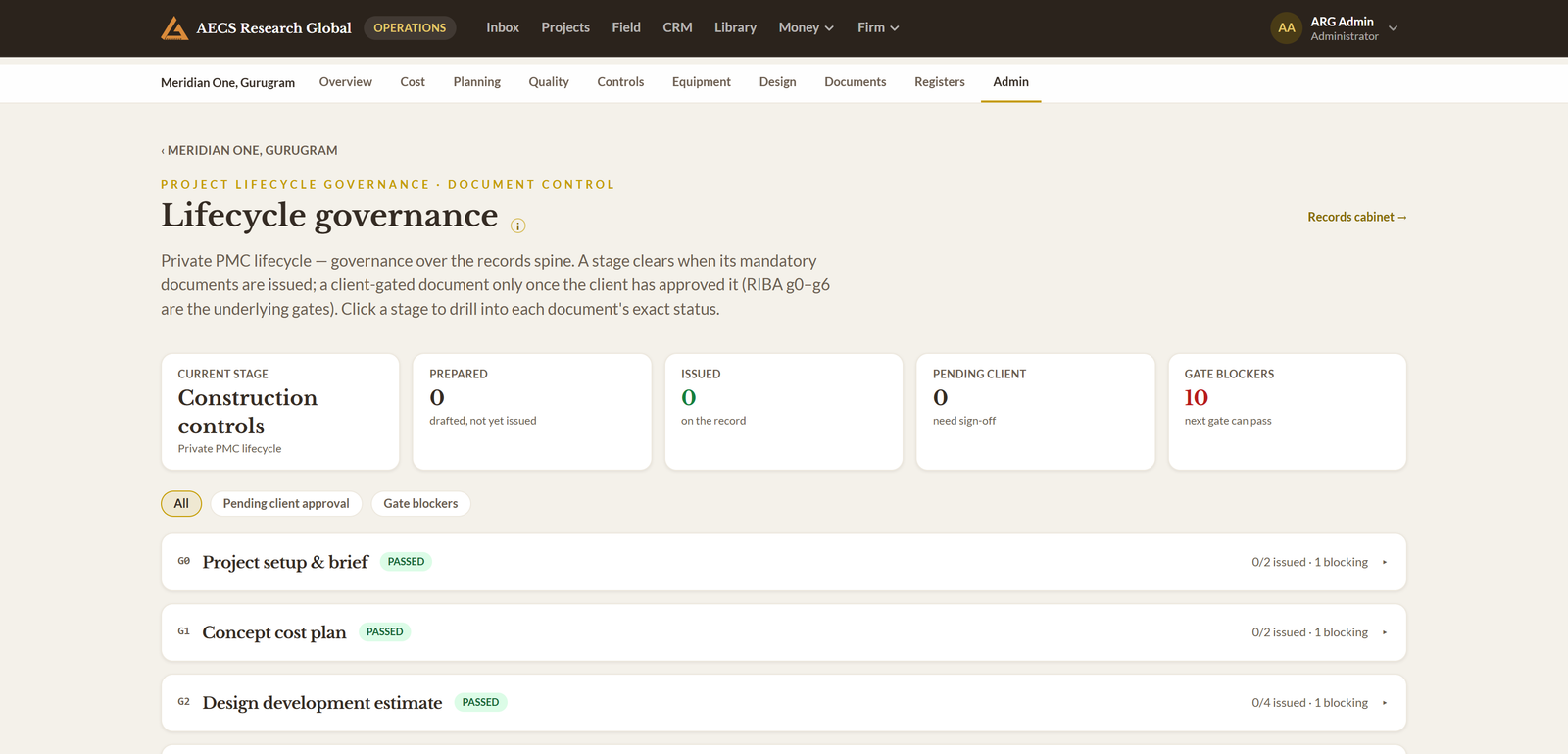
A stage does not advance because someone ticked a box. It advances when the deliverables due at that stage are submitted, reviewed and accepted — the decision is bound to the exact version inspected and recorded as an immutable event. Percentage-complete stops being an opinion.
Consultant & portal submissions
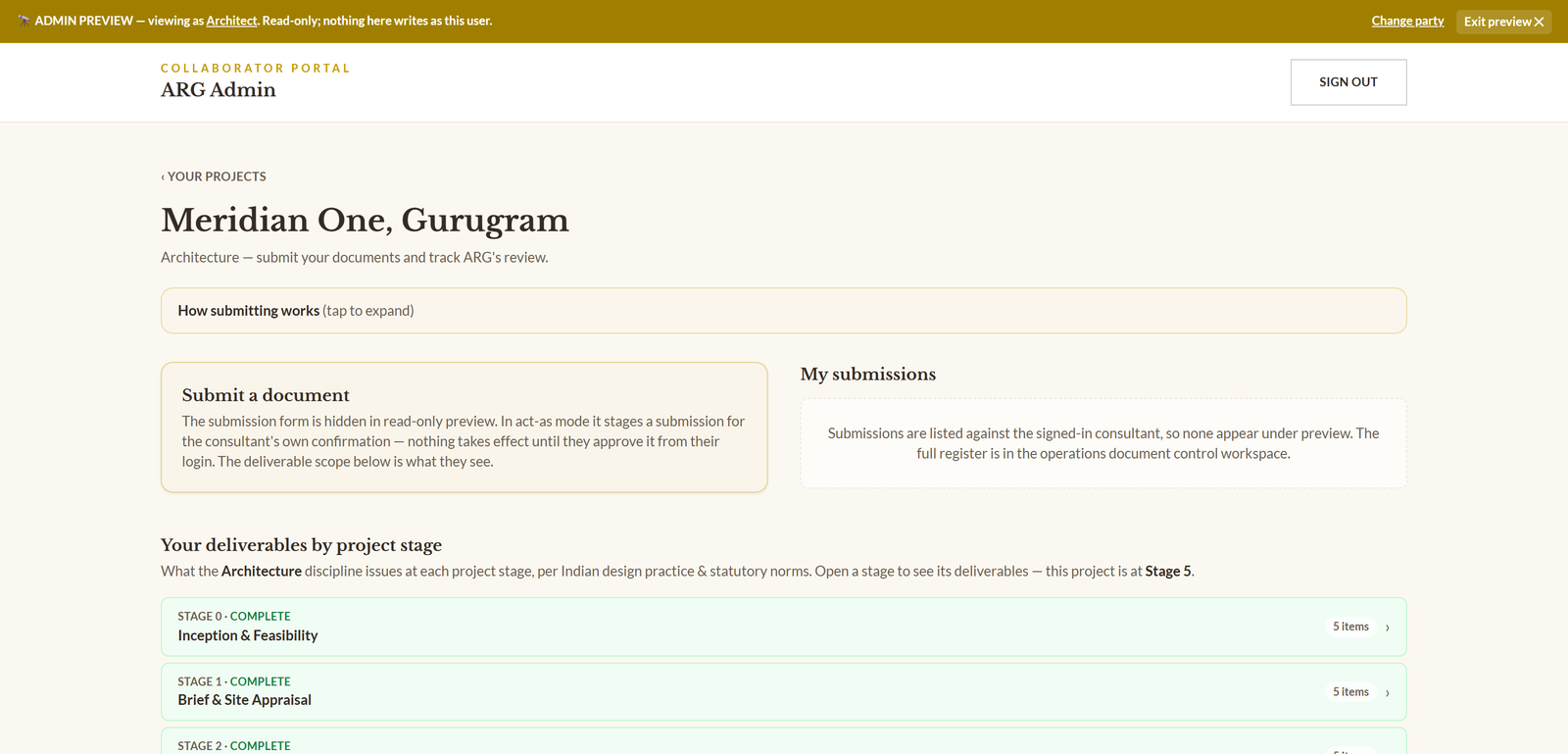
Structural, MEP, façade and landscape consultants get their own portal: appointment scope, deliverable dues, upload of drawing / PDF / CAD packages, your review comments graded by severity, and a KOI score per consultant across the mandate.
AI scope-of-work preparationPlanned
Describe the appointment; the agent drafts the sub-consultant scope, deliverable schedule by stage and review checkpoints against your own past appointments and the applicable codes. It drafts — a principal edits and issues. Nothing is appointed by an agent.
AI deliverable monitoringPlanned
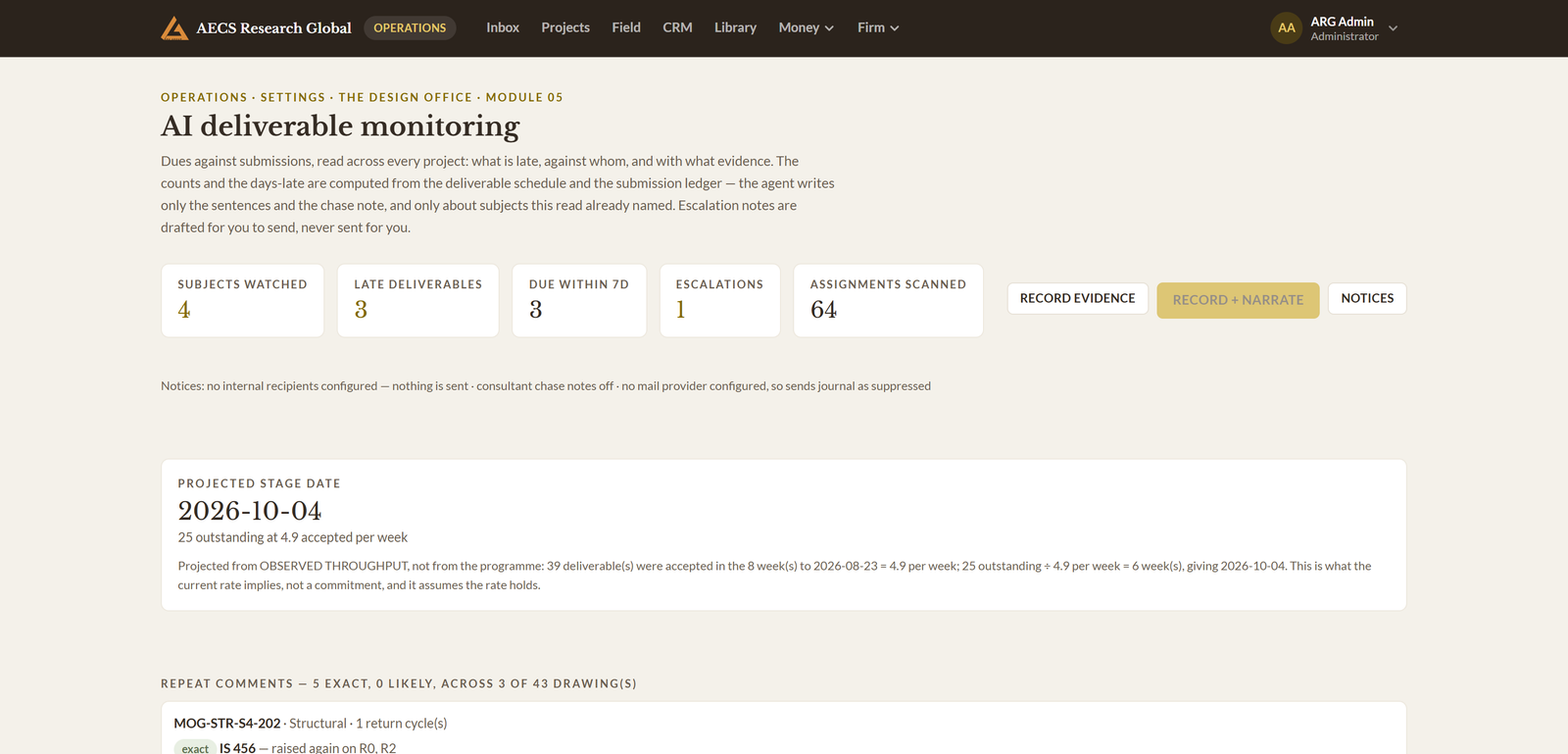
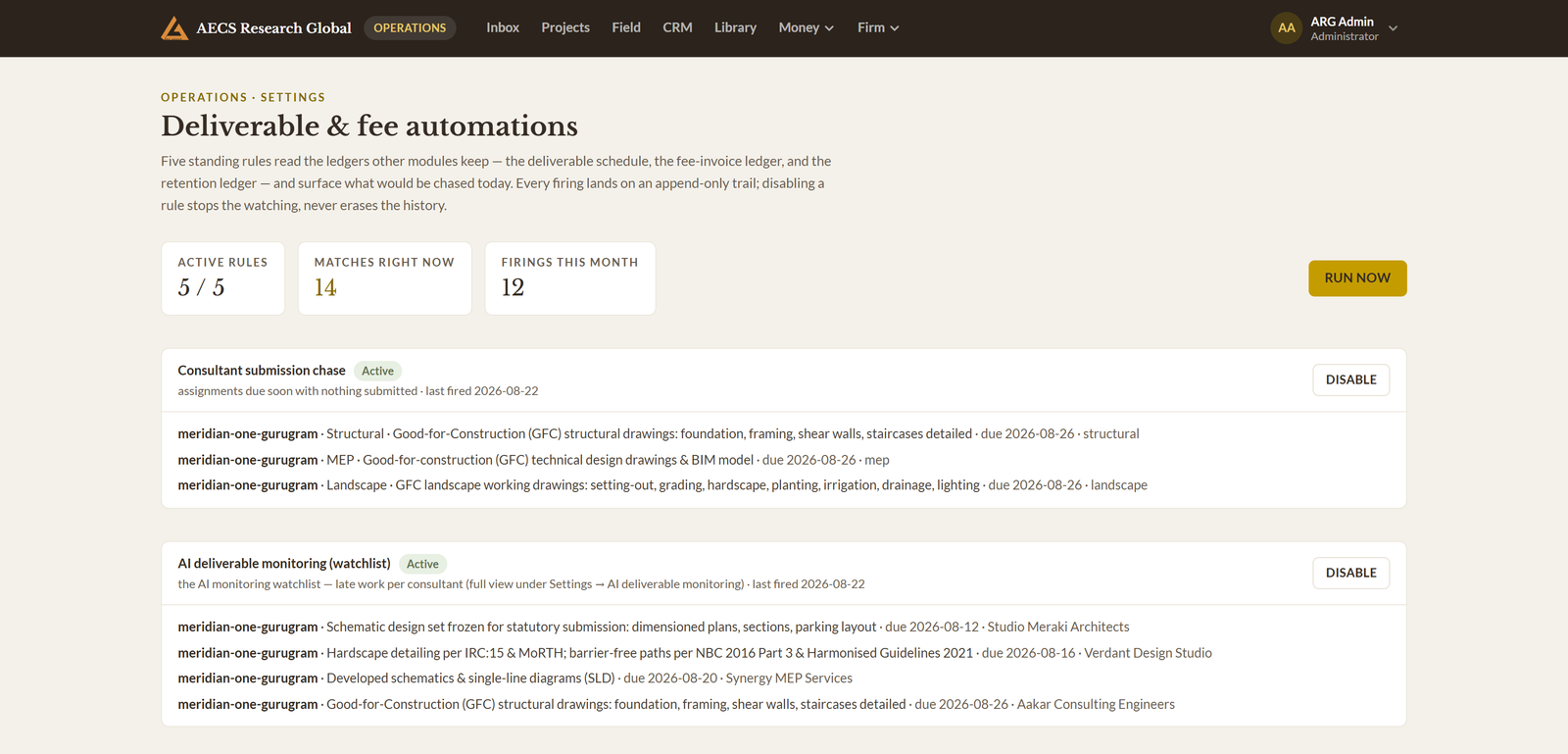
Dues versus submissions, read weekly. The agent flags the consultant who is about to make your stage slip, the drawing awaiting comment for eleven days, and the package that came back without the revision you asked for.
Deliverable & fee automations
Scheduled reminders that go out whether or not anyone remembers: deliverable due dates to consultants, review SLAs to your own team, and staged fee-payment reminders to clients with the invoice and the ledger position attached.
Design-stage cost management
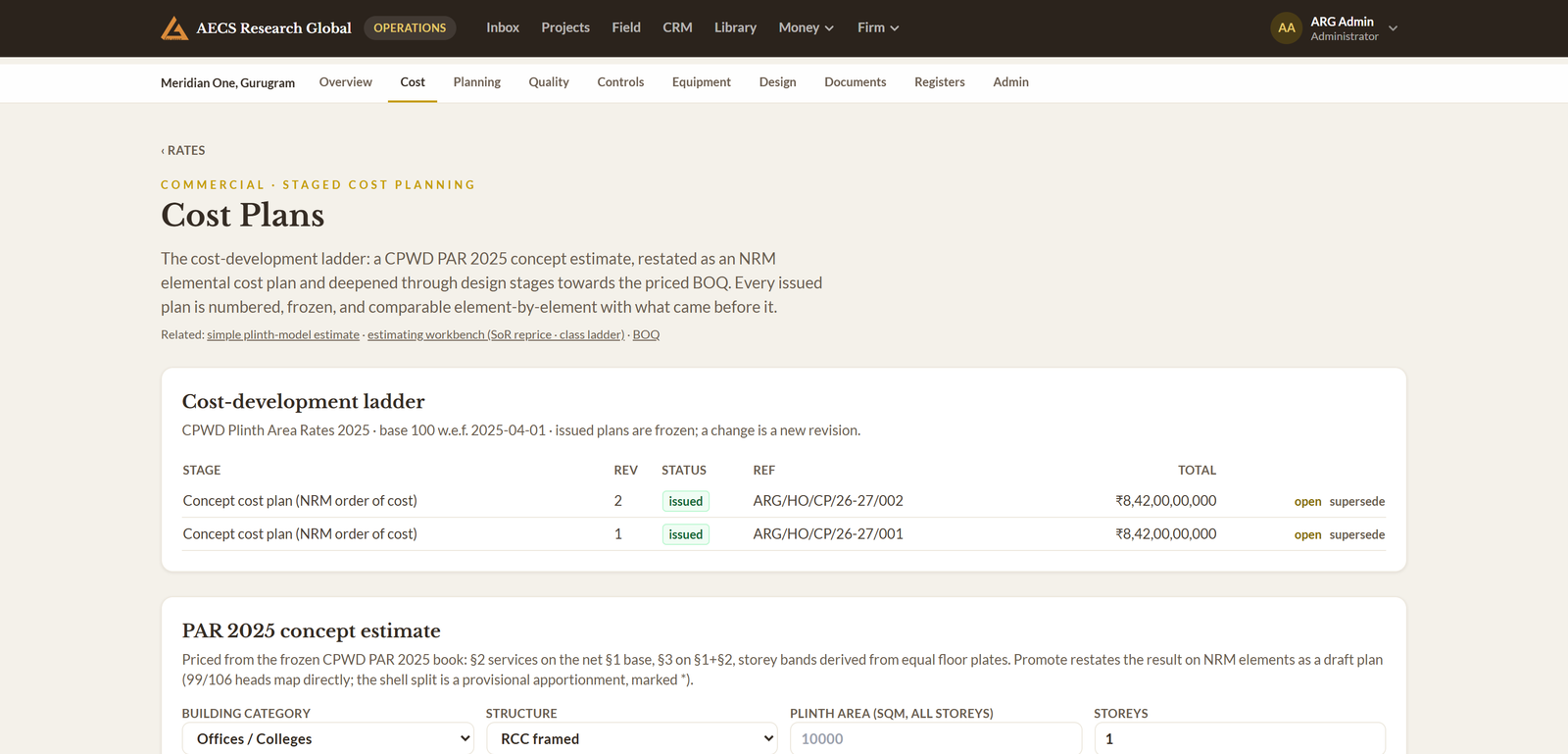
One cost record that matures with the design instead of five disconnected spreadsheets. Each stage inherits the last, so the client can always see what changed, when, and because of which design decision.
Running the practice
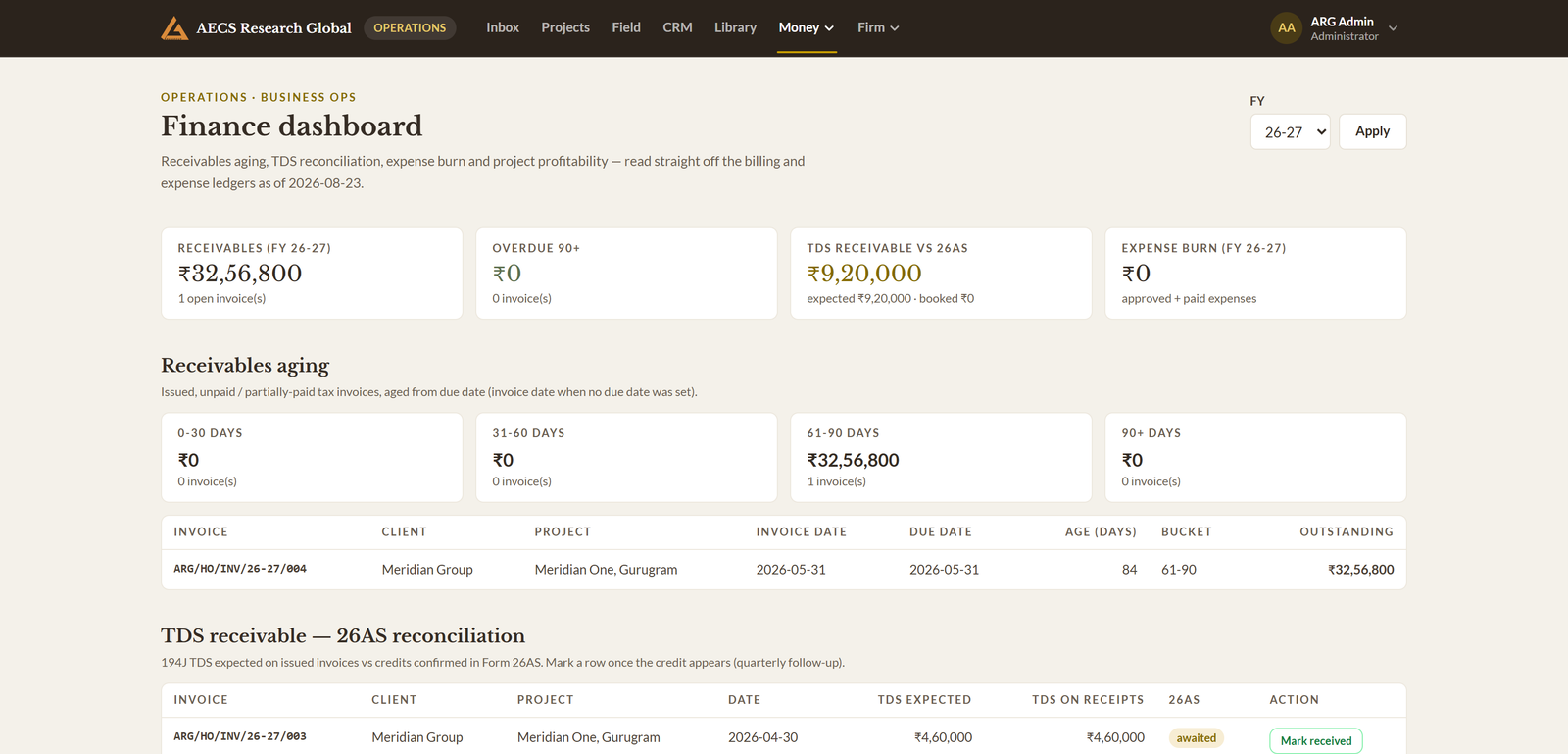
Billing & GST invoicing
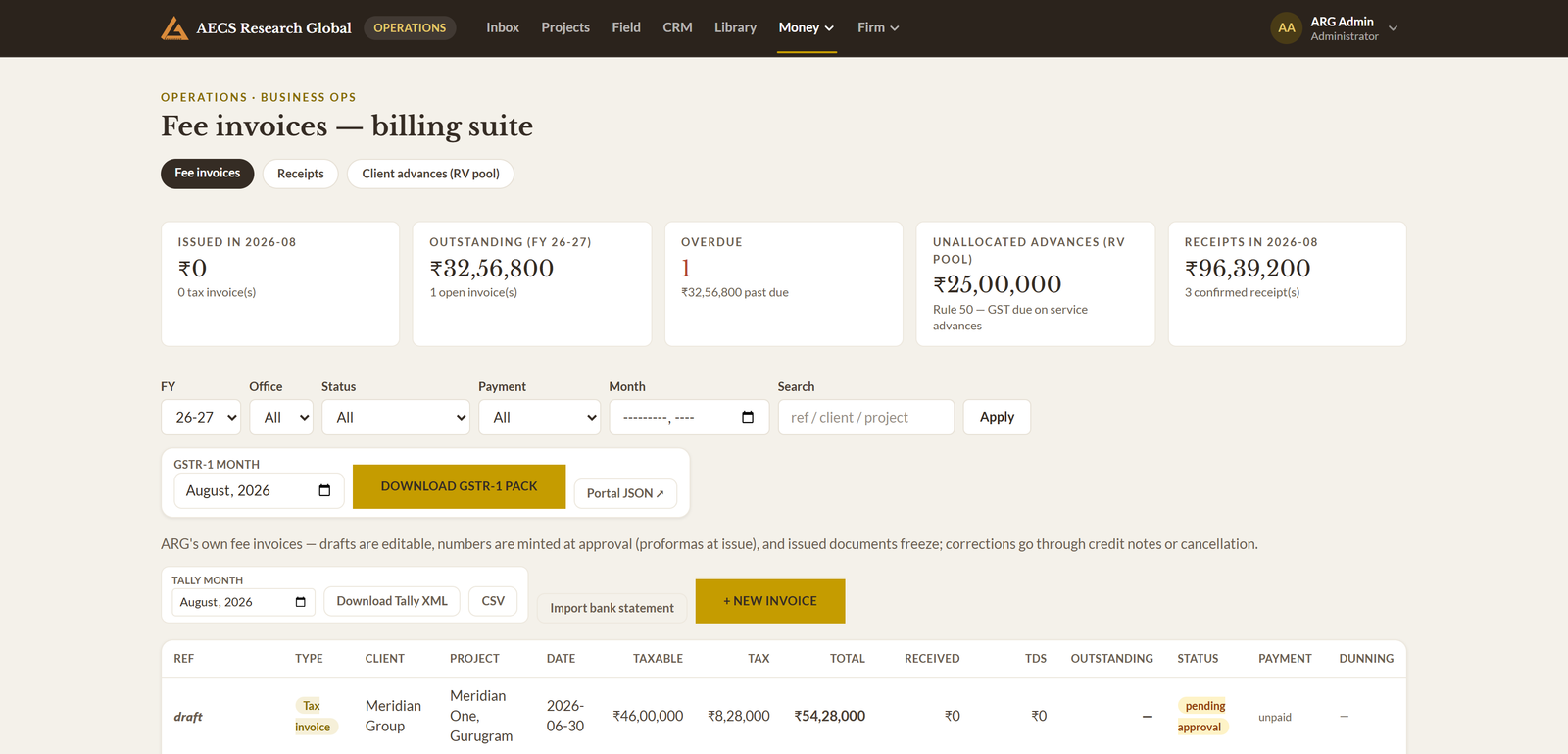
Stage-linked fee invoices with Rule-46 fields, receipts, credit notes, TDS and GST-TDS expectations, and GSTR-1 export. Four-eyes on approve; the reference number mints on approval and the invoice freezes on issue.
Expense management
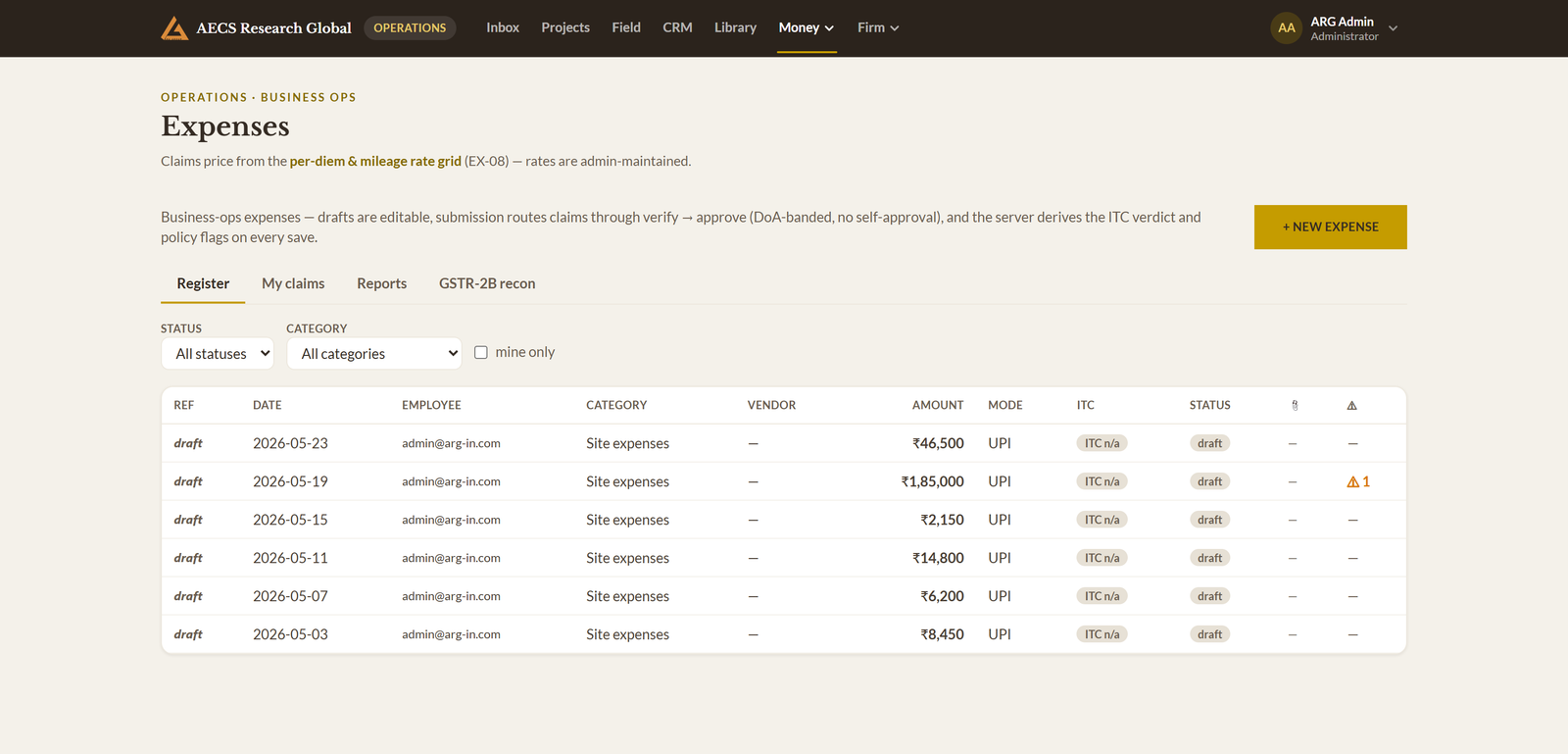
Site visits, printing, statutory fees and petty cash booked to the project that incurred them — with receipt evidence required, cash-payment limits enforced at entry, and an ITC register that reconciles.
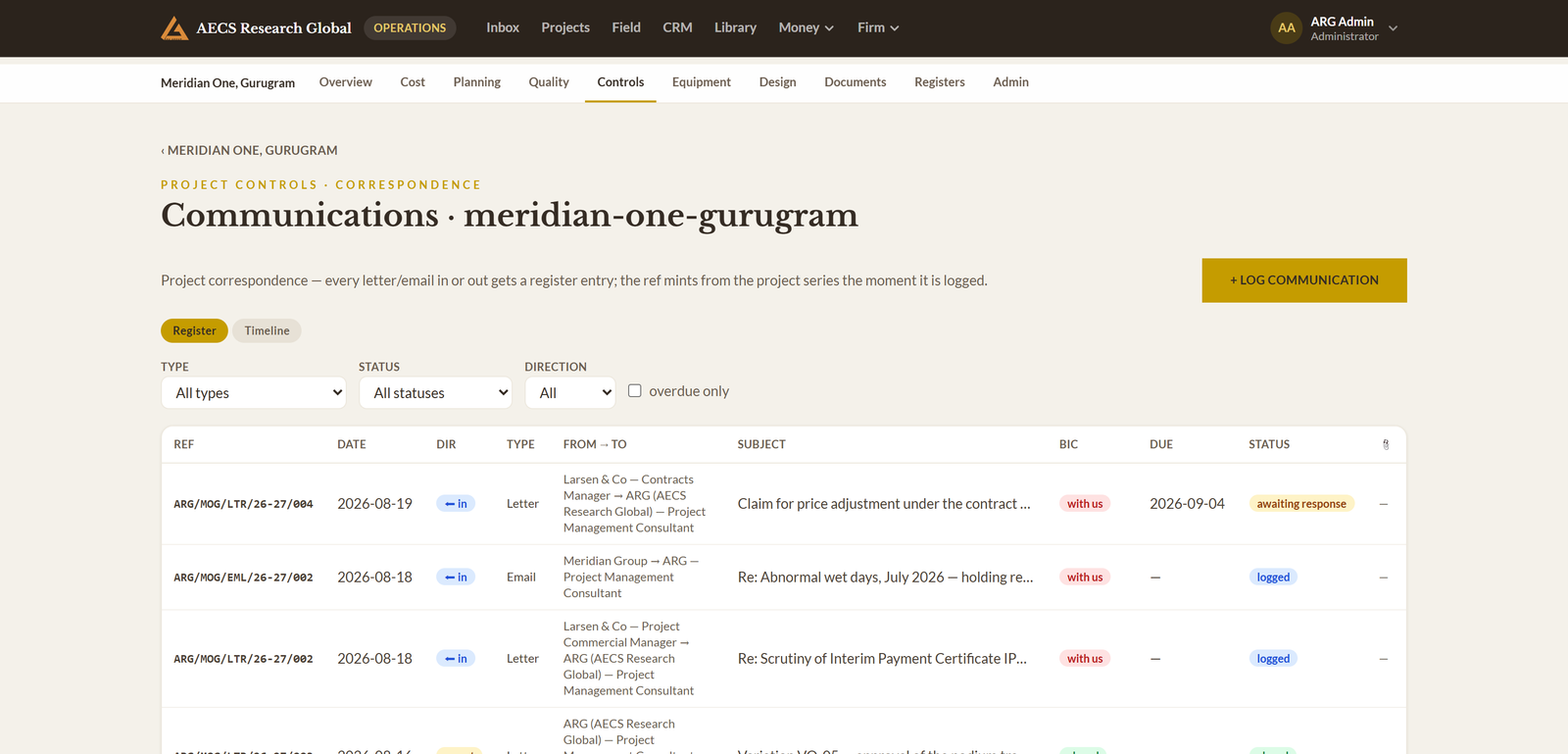
Communication register
Every letter in and out, auto-referenced, with ball-in-court.
Work-done tracking
Work done against the stage and against the fee — so the invoice you raise and the design actually delivered are the same number, and unbilled effort surfaces before it ages.
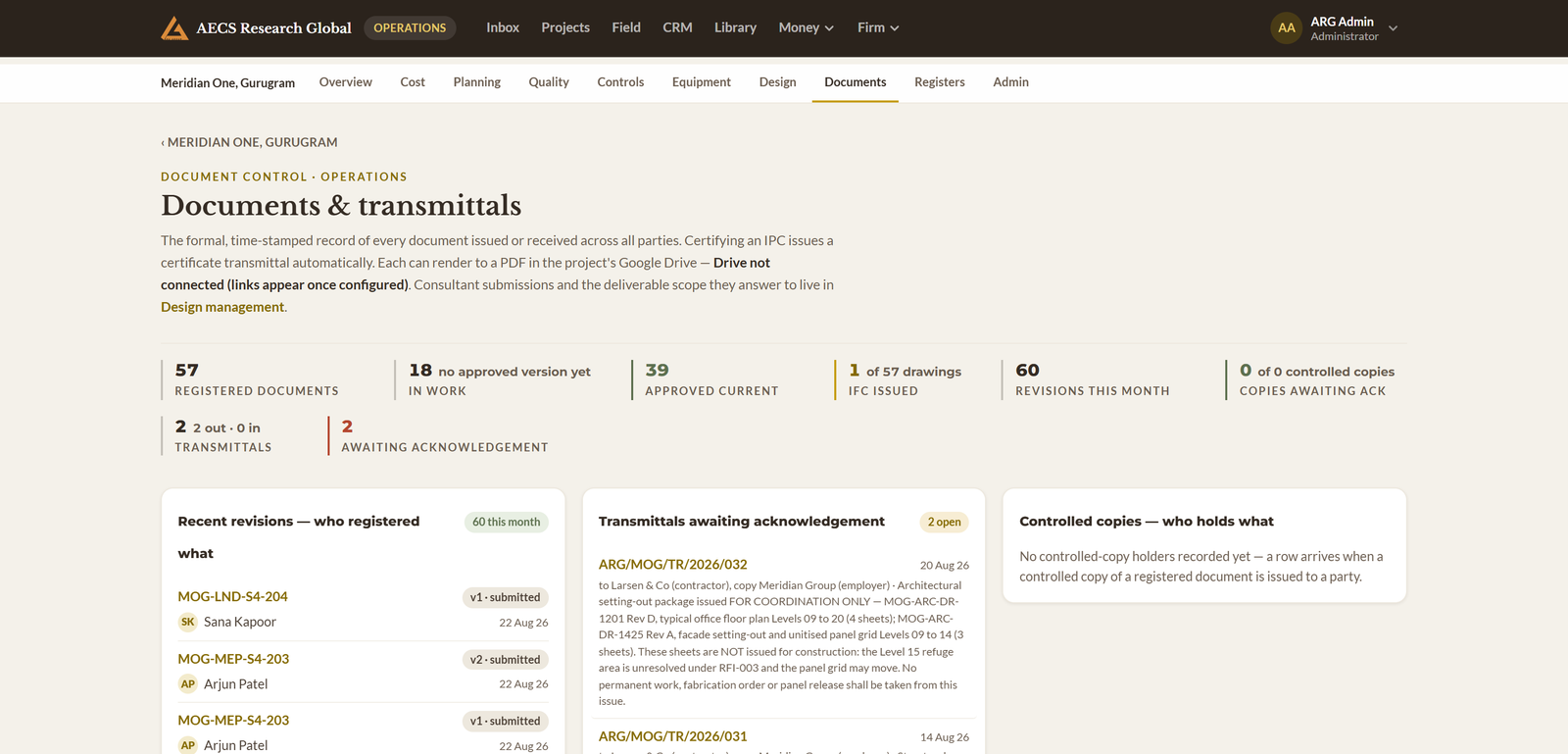
Documents & CDE
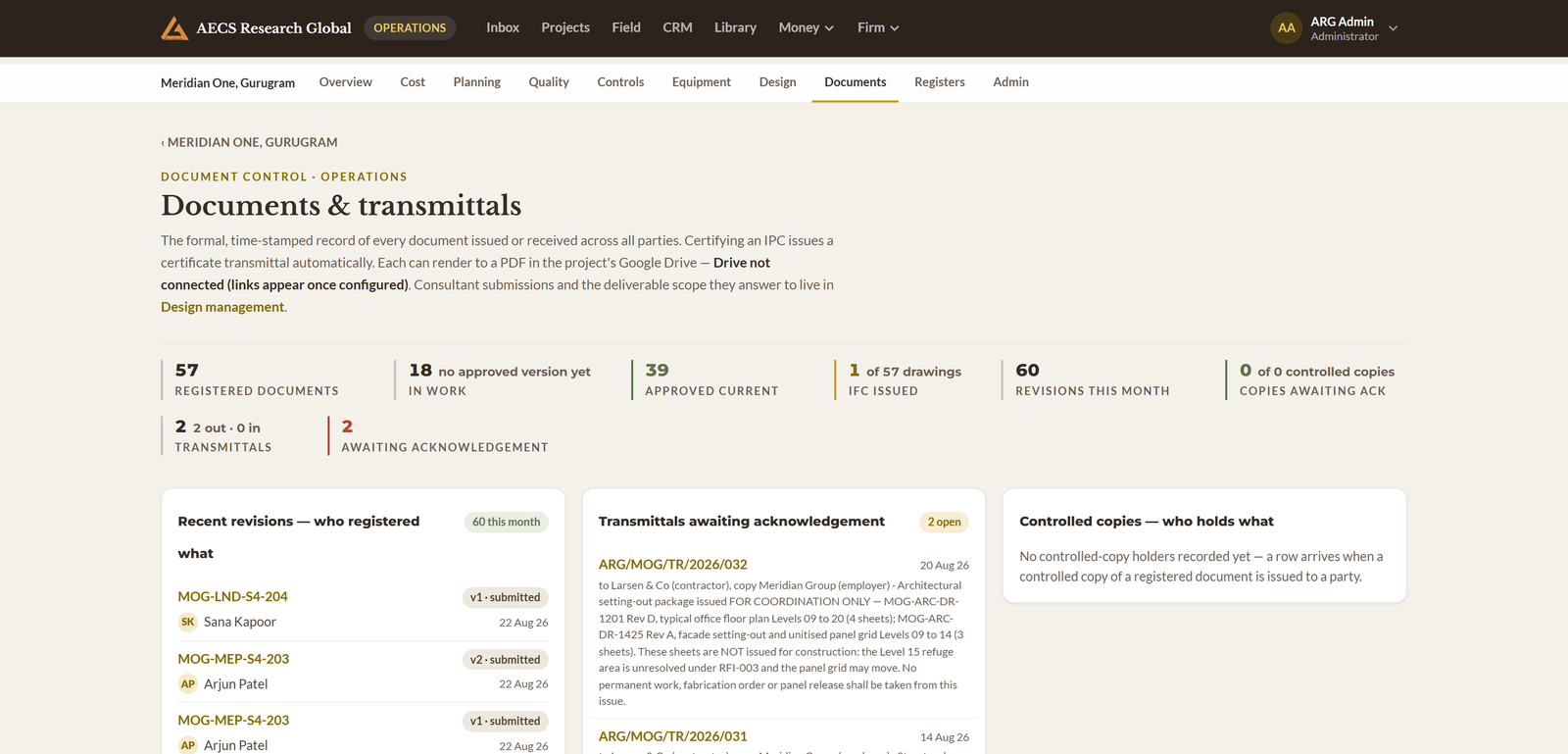
The common data environment behind all of it: an append-only version log, transmittals with acknowledgement, and structured folders your consultants and client can be given controlled access to.
Time tracker — project hours
Hours by person, project and stage, immutable once logged, with a utilisation denominator that states exactly what it deducted. Licensed on every plan. Fee versus effort still needs each person's charge-out and cost rate, which the platform deliberately does not hold — so no rupee figure is shown until it does.
On the roadmap
What a design practice gets next
Published so you can plan around it. Nothing below is licensed today, and nothing below is charged for until it ships.
- Time tracker and fee-versus-effort dashboard
- Design-change and value-engineering register
- Interface and clash matrix across disciplines
- Studio resource plan and utilisation forecast
- BIM / IFC model reference on the register
- Whole-life carbon alongside elemental cost
See it working
The practice, module by module
The Design Office runs on PMC Delivery — ₹4,000 per user, per month.
Minimum 10 seats · billed annually · GST additional · consultant and client portal logins unlimited and free.