The Engineering Desk / Module 01
Rate libraries & rate analysis
DSR and DAR masters, your own firm library beside them, and component-level analysis behind every rate — each one carrying the tag that says where it came from.
- Quantity surveyor
- Estimator
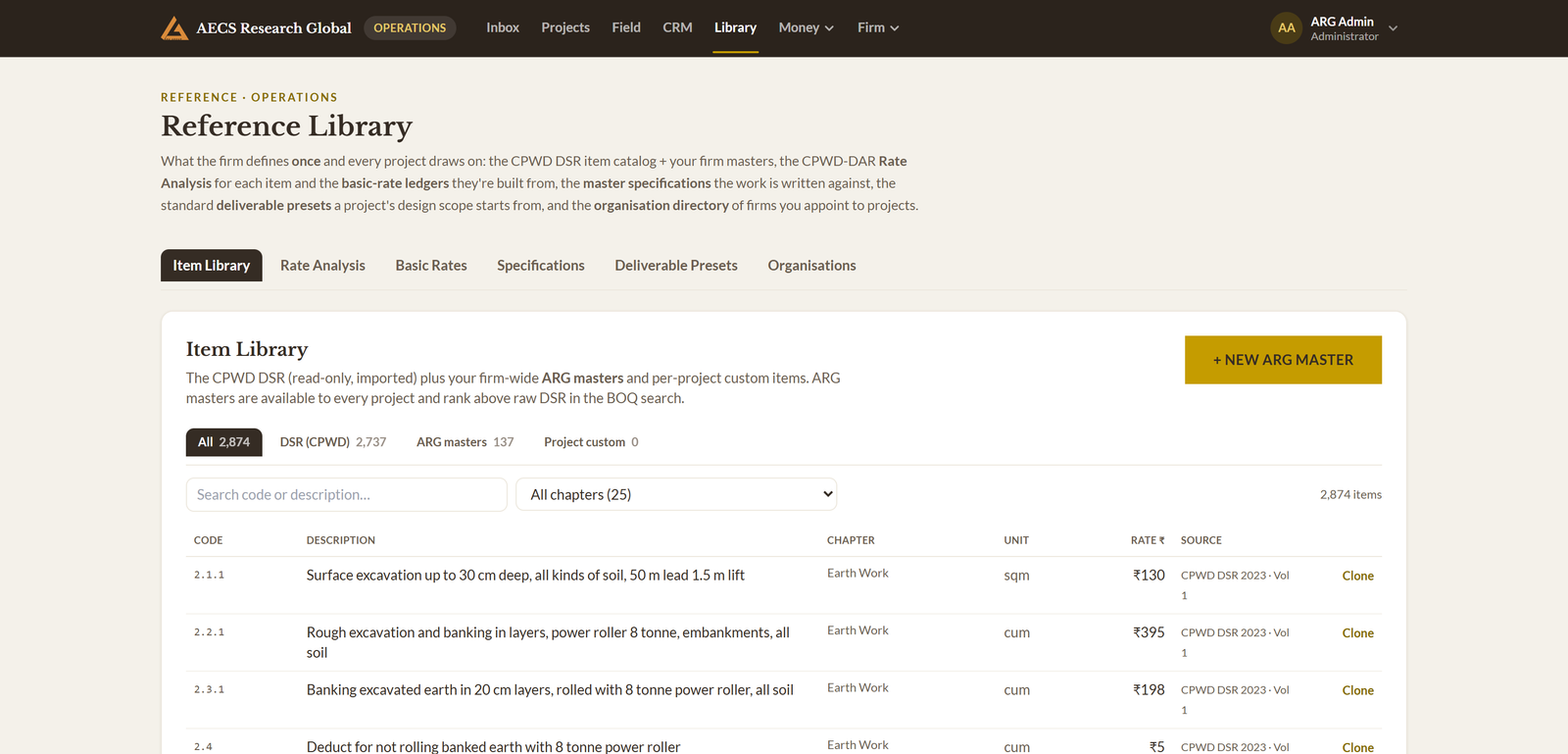
On this desk. An estimate is only as defensible as the provenance of its rates. Source-tagging is a house habit here, not a nicety: an audit query about a rate two years old is answered by opening the record, not by reconstructing someone's reasoning.
What it holds
Published masters
CPWD DSR and delhi analysis of rates held as versioned masters, imported and verifiable, so a project states which edition it was estimated on.
Component-level analysis
Material, labour, plant, wastage, overhead and profit visible per rate. Change a component and every rate that uses it shows the consequence before you commit.
Your firm library
Rates you have derived and defended before, held as firm masters and reusable across mandates — the intellectual property most estimating desks lose when a senior leaves.
Source tags, mandatory
Every rate is labelled — [CPWD DSR], [Vendor], [IS xxxx] or your own recommendation. Requirement and recommendation are never blended into one unlabelled number.
What it produces
- Rate analysis sheet per item, print-ready for a tender annexure
- Impact report when a base material rate moves
- Library comparison: your rate against the published master
What it will not allow
- An untagged rate in an issued document
- Silent edits to a published master
- A rate with no analysis behind it in a tender BOQ