The Design Office
Deliverable & fee automations
The reminders that go out whether or not anyone remembers — to consultants, to your reviewers, and to clients who owe you money.
- Practice manager
- Accounts
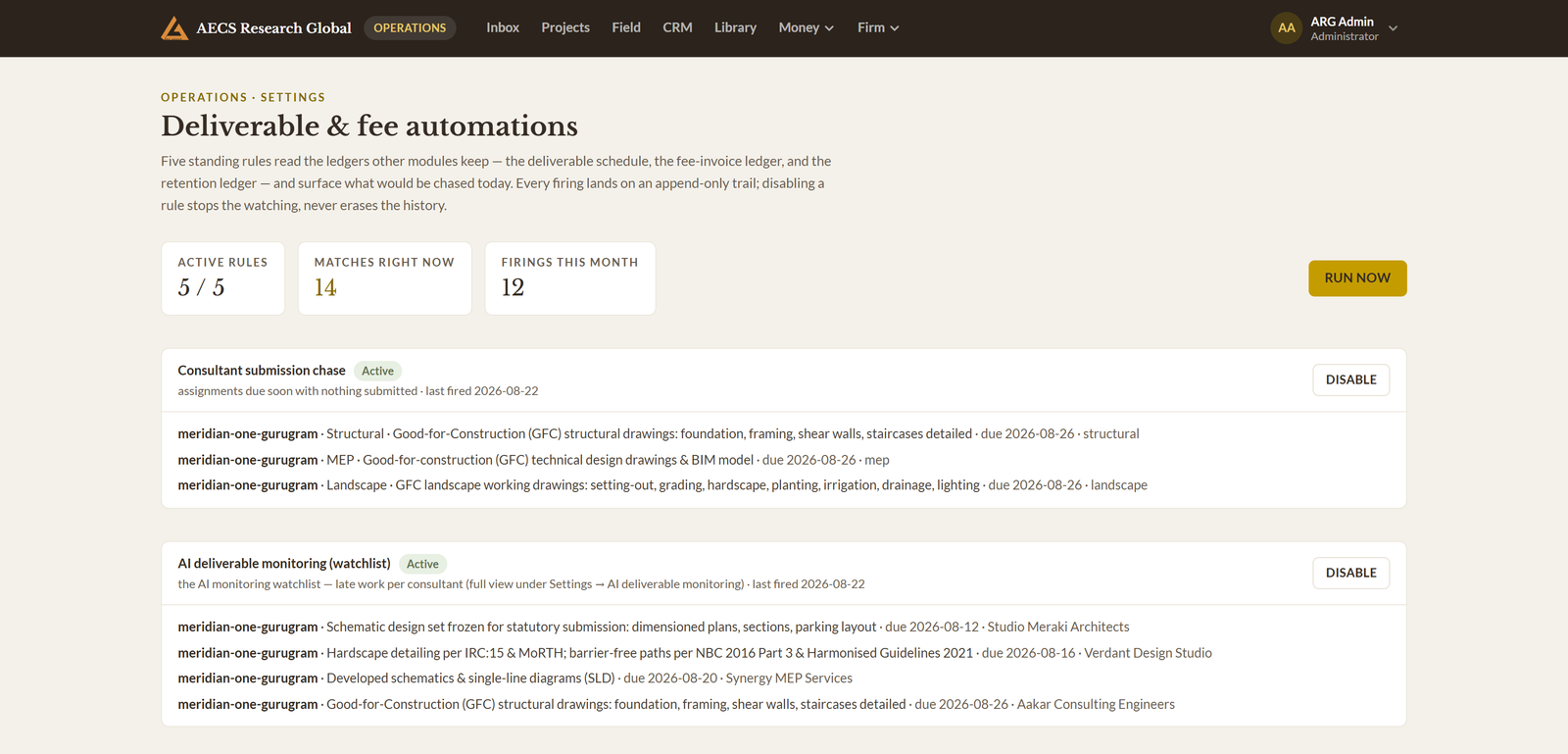
In a practice. A design office almost never has a collections problem — it has a reminder problem. The invoice went out, the client meant to pay, and nobody wanted to be the one to chase a good client. Scheduled, factual, unemotional reminders solve most of it, and they do not sour a relationship the way a partner’s phone call does.
How it behaves
Rungs, not nagging
Each reminder is a defined rung with its own tone and recipients. A rung fires once; it latches so a re-run cannot send it twice; snooze and opt-out are honoured per contact.
Every send is journalled
Sent, suppressed or failed — with the reason. A reminder that could not go because no contact was on file is recorded as suppressed, not silently dropped.
Approval where money is involved
Deliverable reminders send themselves. Fee-related sequences on a named client can require a partner’s release first — configured per client, not per invoice.
What it will not do
- Send the same rung twice
- Chase an invoice that is not issued
- Contact a client who has opted out
Reminder audiences
To consultants
Deliverable due in 7 days, due today, overdue at 3 / 7 / 14 days. Each carries the deliverable reference, the stage it blocks and the open comments outstanding.
To your own team
Review SLA about to lapse, drawing sitting at S0 past its issue date, comment unresolved beyond its due date, transmittal unacknowledged for a week.
To clients
Stage complete and fee now due, invoice issued, payment due in 7 days, then overdue rungs at 7 / 21 / 45 days — with the invoice, the stage evidence and the ledger position attached.